Digital Transformation
Modernise in sequence, not in one leap.
Big-bang replacements fail for the same reason every time: the old system contains a decade of undocumented behaviour that nobody can specify in advance.
01When this applies
Signs you are in this territory.
If two or three of these are true, this is usually the right place to start.
- A critical system only one person understands
- A platform that is out of support or nearly so
- Change requests measured in months
- Data locked in a format nothing else can read
- A replacement project that has already been attempted once
02Approach
How we run it.
01
Assess honestly
What the system actually does, what depends on it, and which parts are genuinely load-bearing. This is usually the first time it has been written down.
02
Sequence by risk and value
The first thing to move is rarely the biggest. It is the one that proves the migration pattern with the least exposure.
03
Run both, briefly
New alongside old, with a tested rollback, until the new path has carried real load. Cutover is an event, not a leap of faith.
04
Leave the team able to continue
Documentation and patterns your engineers can extend, so modernisation does not become a permanent dependency on us.
03Deliverables
What you end up with.
- Technical assessment and dependency map
- Prioritised modernisation roadmap
- Incremental migration of workflows and data
- Integration layer between old and new
- Automated tests around legacy behaviour
- Documentation and knowledge transfer
What good looks like
- Change requests measured in days rather than months
- A supported platform with a known upgrade path
- Knowledge in documentation rather than in one head
Delivered by
04Relevant work
Software we have built along these lines.
- Platform
avryxa.com
This site: a publishing platform, applicant tracking system, lead and business-development console, and tool suite behind a marketing front end.
 Live tool
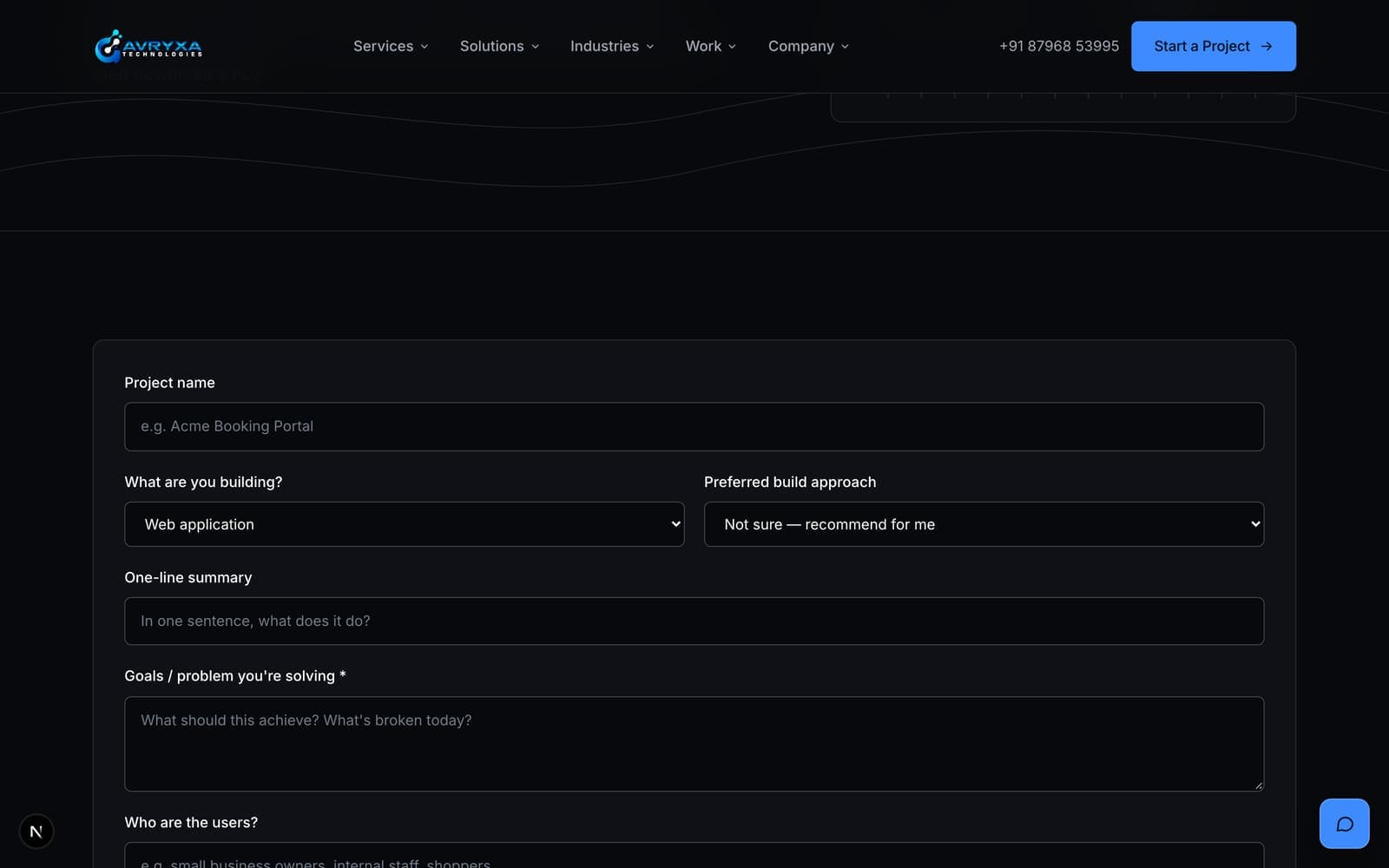
Requirements Generator
Turns a rough idea into a structured requirements document — scope, features, stack and milestones — ready to send to any developer.
05Questions
Before you ask.
In almost every case, yes. Running both systems in parallel is what makes that possible, and it is worth the temporary duplication.
That is common. We characterise behaviour with tests against the running system before changing anything.
With an assessment. It is short, it is paid, and it ends with a roadmap you own whether or not we build it.
Keep exploring
Other solutions.
- Business SoftwareReplace the spreadsheets, shared inboxes and manual handoffs holding your operation together.
- AI SolutionsPut a language model to work on your documents, your support queue and your internal knowledge.
- AutomationConnect the systems you already pay for and take the repetitive steps out of the middle.
- SaaS ProductsTake a product from validated idea to a multi-tenant platform with billing, roles and analytics.
Start here
Good software starts with a straight conversation.
No pitch deck, no discovery fee. Describe the problem and we will tell you what it would take to solve it — and what it would cost.